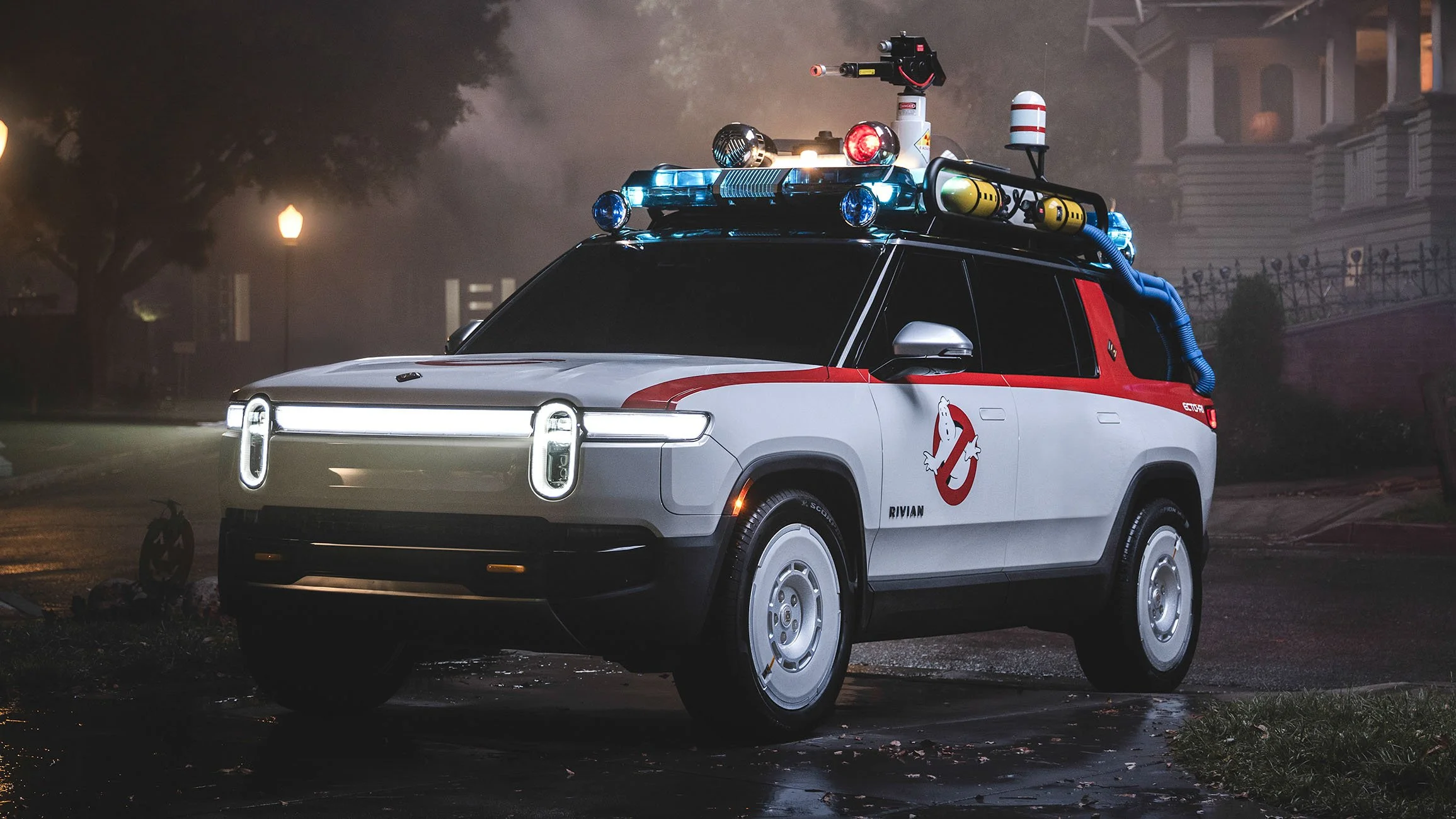
Rivian has done something I think a lot of automotive businesses could learn from this Halloween: it has found a way to make the car itself part of the content!
For Halloween 2026, Rivian partnered with Sony Pictures to bring Ghostbusters into its vehicles through a limited-time Halloween Mode. The experience includes themed lighting and sounds, hidden characters, interactive games and features that owners can explore through their vehicles and the Rivian app. The campaign also features a custom Ecto-R1, a commercial starring Bill Murray and Halloween activations at Rivian locations.
It's a fun collaboration, but there's a bigger marketing lesson here. Rivian hasn't simply created an advertisement to promote its vehicles. It's created an idea that can generate attention, conversation and social media content across multiple platforms!
And that's where automotive marketing gets interesting.
One Campaign, An Entire Content Strategy
One of the biggest challenges businesses face with social media is figuring out what to post consistently. Automotive brands are particularly susceptible to this because their feeds can quickly become a revolving door of vehicle photos, specifications, promotional offers and another variation of "check out this beauty."
There's nothing wrong with showcasing your products. The problem is when that's all you do.
Rivian's Ghostbusters campaign gives the brand far more to work with than a few promotional images. The partnership created opportunities for teaser content, launch announcements and events, behind-the-scenes footage, product demonstrations, humorous videos, customer reactions and follow-up content highlighting different features of the Halloween Mode.
Each piece of content can serve a different purpose while still contributing to the same campaign.
The initial reveal creates awareness. Demonstrations show the features in action. Behind-the-scenes footage gives people a glimpse into the creative process. Customer videos demonstrate how owners interact with the experience. And humorous clips provide content that people might share with friends who have absolutely no intention of buying a Rivian but happen to love Ghostbusters!
One strong campaign idea can provide weeks of content, rather than leaving you scrambling to come up with something new every morning.
Make Your Product the Content
The smartest part of Rivian's campaign is that the collaboration actually changes the customer experience.
Rather than simply placing a Rivian in a Ghostbusters advertisement, the brand has incorporated the partnership into the vehicle itself. Owners can interact with themed features and discover elements of the experience firsthand.
From a social media perspective, that creates something incredibly valuable: a product people have a reason to film and share.
Think about it. An owner activates Halloween Mode, discovers one of the hidden features and shows it to a friend. That friend films their reaction. Someone else shares a clip of their favourite feature. Before long, the campaign has opportunities to reach people through content that doesn't come directly from Rivian's own accounts.
The brand still needs to create its own content, of course, but it has given its audience something worth talking about.
This is particularly relevant to automotive businesses because cars are naturally visual, experiential products. People love seeing a transformation, hearing an engine start, watching a build come together or getting a glimpse of a vehicle they wouldn't normally encounter.
If you're running a detailing business, for example, the finished vehicle is only one part of the story. The condition it arrived in, the work involved in restoring it, the products used and the owner's reaction can all become content.
For a performance shop, the story might start with the original vehicle and follow the entire build, right through to the first drive. For a dealership, it might be the moment someone finally gets the keys to the car they've spent years wanting.
The product is still the focus, but there's now a story around it.
Social Media Should Give People Something to Talk About
There's a difference between creating content that looks good and creating content that gives people a reason to engage with your business.
Rivian's campaign has several conversation starters built into it. There's the nostalgia of Ghostbusters, the return of Bill Murray, the custom Ecto-R1 and the novelty of interacting with features that wouldn't normally be part of the vehicle experience.
These elements give people different reasons to pay attention. Some might be interested in the car, others in the film franchise, and others simply because the campaign is entertaining.
That variety matters because your entire audience isn't necessarily interested in the same thing.
An automotive enthusiast might want to know about a vehicle's capabilities. A potential customer might care about the ownership experience. Someone who already owns the vehicle might be interested in discovering features they haven't tried. And someone who has never considered buying one might still enjoy watching a creative campaign.
Not every piece of content needs to convert someone into a customer immediately. Sometimes its job is to introduce the brand, entertain the audience or give people a reason to remember you.
The trick is making sure your content has a purpose beyond simply filling a space on the calendar.
Give Your Audience Something to Participate In
Rivian's Halloween experience also demonstrates the value of giving people something to explore rather than simply asking them to watch an advertisement.
The interactive features and hidden elements encourage owners to spend time with the experience. That creates natural opportunities for people to compare discoveries, share their favourite features and post their own videos.
You don't need a Hollywood partnership to apply the same thinking to your social media strategy.
An automotive business could create a recurring series that asks followers to guess the price of an unusual vehicle before revealing the answer. A detailer could document a particularly challenging transformation and invite people to guess how long it took. A performance shop could reveal a vehicle's horsepower after asking followers to submit their predictions.
A rally company could share photographs from previous events and ask participants to identify the location, or encourage past attendees to share their favourite memories.
These ideas aren't complicated, and they don't require an enormous production budget. They simply give people a reason to get involved.
That involvement can also give you valuable insight into your audience. The questions people ask, the features they care about and the stories they share can help you understand what your next piece of content should be.
Social media works best when it's treated as a conversation rather than a one-way broadcast.
Turn Customers Into Part of Your Content Strategy
One of the biggest opportunities for businesses is the content their customers can help create.
Car enthusiasts already film their vehicles, document modifications, attend meets, share road trips and talk about their experiences online. Businesses don't necessarily need to manufacture every story themselves. Sometimes, they simply need to recognize the stories already happening around them.
Rivian's campaign gives owners an experience they can capture and share, extending the campaign beyond the brand's own channels.
For smaller automotive businesses and brands not even related to cars, this could mean encouraging customers to share their finished builds, featuring their vehicles or products in regular social posts or filming their reactions when a project is complete. It could also mean collaborating with local creators or asking customers to contribute footage from events.
With permission, that UGC can become a valuable addition to your own social media presence. It gives prospective customers a more personal perspective on your work and helps demonstrate what the experience of working with your business is actually like.
There is also an authenticity factor here. A business can tell people how good its service is, but seeing a real customer talk about their experience provides a different kind of reassurance.
Of course, user-generated content shouldn't replace everything you create yourself. Your brand still needs a consistent voice, a clear strategy and content that communicates what makes your business different. But your customers can help bring that story to life in ways that polished promotional content sometimes cannot.
The Campaign Doesn't Have to Live on One Platform
Another lesson from Rivian's approach is that a campaign can extend across multiple touchpoints instead of relying on a single advertisement.
The Halloween concept connects the vehicle experience with the app, promotional video, physical Ecto-R1 displays and in-person activations. Each element contributes to the wider idea while offering a different way for people to encounter the campaign.
For social media managers, this is an important distinction. Publishing the same video on Instagram, TikTok, Facebook and YouTube is distribution. Building a campaign that gives each platform and format something useful to contribute is a broader content strategy.
A behind-the-scenes video might work well on TikTok, while an Instagram Reel could showcase the finished vehicle. A YouTube video could document the full build process, and Facebook could help promote an upcoming event or encourage conversations among an established community.
The underlying idea remains consistent, but the execution can change to suit the platform and audience.
For businesses, this approach also makes it easier to connect social media activity with real business objectives. Content can build awareness, encourage enquiries, promote an event, support a launch or keep an existing customer community engaged.
The important part is knowing what each piece of content is supposed to achieve.
You Don't Need a Ghostbusters Partnership to Do Good Marketing
Obviously, most small businesses, detailing shops and automotive businesses aren't going to partner with Sony Pictures or bring Bill Murray into their next campaign. That's not the point.
The lesson isn't that every business needs a celebrity, a custom-built vehicle or an elaborate Halloween activation. It's that Rivian has taken one creative idea and found multiple ways to make it interesting to its audience. From build-up to launch and beyond!
Smaller businesses can do the same on a more realistic scale and autumn is a great time to do so!
The Real Lesson for Automotive Social Media
Rivian's Ghostbusters campaign is a good reminder that social media marketing doesn't have to be limited to product photos, promotional offers and the occasional video of an engine revving.
The most interesting campaigns give brands something worth talking about and their audiences something worth sharing. They connect the product to an experience, build a story around a central idea and create opportunities for the audience to become involved.
That doesn't mean every post needs to be entertaining or every campaign needs to go viral. Businesses still need to communicate practical information, showcase their work and make it easy for potential customers to enquire.
But those things can exist alongside content that builds personality, creates familiarity and gives people a reason to follow you before they're ready to buy!
So, instead of starting your next content planning session with the question, "What should we post this week?", try asking something different.
"What are we doing that gives people a reason to talk about us this week?"
Because there's a big difference between having a social media account and using social media to build a brand… and Rivian's Halloween campaign is a good example of what can happen when you start thinking beyond the next post!